
Remote Working Manifesto - Part 1
Remote Working Manifesto for Individuals working remotely either part-time or full-time.


Why is this important today?
In the “new normal”, commuting and office buildings have taken a backseat while remote working and virtual meeting tools are taking over. We are equipped with many tools (incl. laws) to promote work and productivity and handle competition right now, but we are moving to a world without boundaries. With this new world of work, there are challenges that confront us, as individuals, as businesses, and even as governments. This manifesto is about welcoming the good changes that we anticipate and learning to face/cope with the bad ones.
Remote & flexible work helps improve diversity in workplace. It will also help in the global challenges of rapid urbanization, equal pay, getting women back to work and education for all. These could also require governments to plan policies that will help boost the economy and increase employment for more of the community.
I could have written just the first part as an article. Remote working affects us all, it is not just down to individuals. It is important that I address this document to everyone impacted by this massive change.
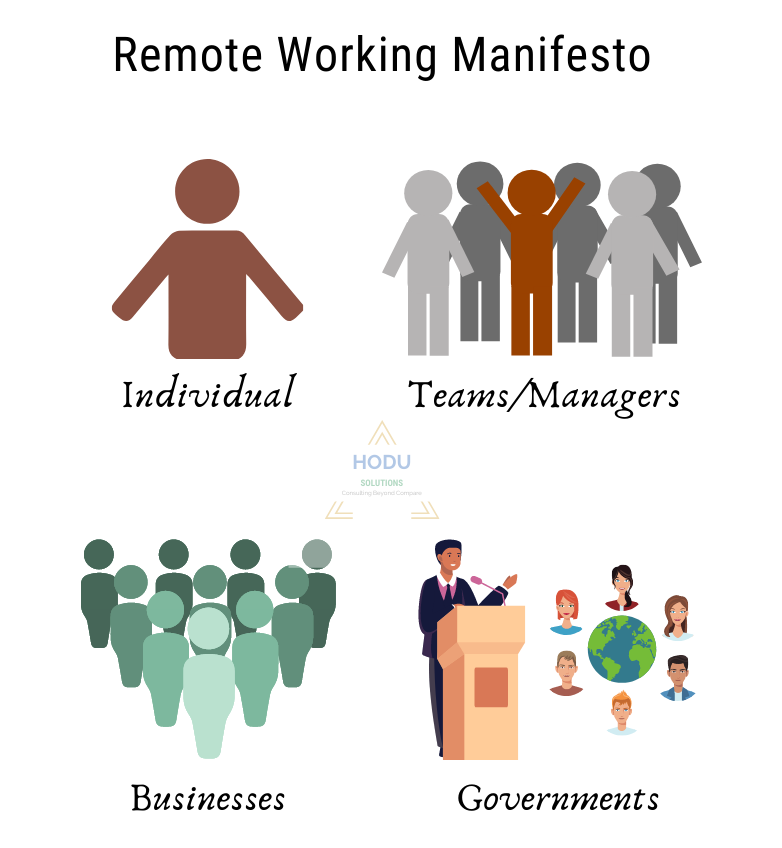
Part 1 - Individual workers who completely work remotely or work remotely on a part-time basis
Part 2 - As a manager to help your team work efficiently. It is important that we as managers adapt to this change to motivate our team to work together as a cohesive unit.
Part 3 - As a business, how do we help our employees, our customers, our vendors, and other ecosystems that support us.
Part 4 - Changes we need as a Government. If we need a borderless world there are several regulations that should be changed.
Part I - As an individual
If there is a chance for you to work remotely these are some of the guidelines that will help you to plan your day and to be effective in both life and work.
Life-work balance:
In our lives so far, we have always put life in the backseat. Life comes before work. Stop saying “work-life balance”. There is more to life than just work. Working 9 to 5 (some of us from 8 am to 9 pm) we have focused much of our energies on work during the week, only to spend quality time just during the weekends with our family or friends.
Now, life takes precedence.
Family, friends, and relatives deserve and get much more time as we are only as strong as our community. This article provides steps to get your life and work in order.
Focus and productivity:
As individuals, if this is the first time you are working remotely, it is difficult to manage your productivity when working from home (WFH). WFH suffers from a lack of formal structures in place such as an office. You switch from doing office work to cooking to picking up your children from the park. Doing so many things and being interrupted from time to time will obstruct your focus. It will affect your productivity.
It is up to each of us to plug that loss in productivity by engaging ourselves in a 'flow' state. Flow state is when your creative juices flow and you do your best work.
Doing your best work is only possible if you know your productive times of the day. Establish a routine even when you are working from home. Stick to a schedule and finish off tasks according to priority and deadlines. For example, set only a handful number of tasks for each day according to priority and deadlines. Work through each of them and review it at the end of the day. Add tasks for tomorrow to a checklist. Give yourself the power of positive reinforcement in the beginning. Hold yourself accountable. If you find it difficult, get a friend as an accountability partner. If you have not tried the Pomodoro technique, Pareto Principle, and Ivy Lee Method, you can try them now.
If you want to zone in and work together with an accountability partner, start a virtual meeting to work in sprints. Repeat.
Level up your inner Pokémon:
Evolve, constantly.
Make sure that you are valued at your workplace for your skills. Know your controllables and uncontrollables. Learning and getting better is within your control; learning never stops. Have a schedule to work, learn and de-stress. Learn new life skills. You have time.
Learning can be for career progression or on a personal level. If there was a certification you wanted to do – go, get that! If you want to learn making cocktails or baking cookies, now is a good time. Sometimes, learning fun things can be a great way to de-stress.
Keep learning, keep growing. As long as you keep the hunger for knowledge satisfied, you will keep leveling up.
Do not burnout:
Do not take up more work than you can usually do. If you have saved 2 hours in commute, it does not necessarily have to be used at work. Only when you know that you have enough time to fill with more work, take up that work.
Some people burnout only after 6 hours of work, some will need more even after working for 10 hours. Know when to stop.
Some people burnout only after 6 hours of work, some will need more even after working for 10 hours. Know when to stop. Burnout leads to loss of productivity for a longer period and it impacts you, your team, and your company.
Set up a cut-off time to disengage from work. Do not fall into a trap of checking emails after this cut-off time. Keep your life distinct from work.
Ask for help:
You can be an Avenger but not as an intergalactic Captain Marvel all the time. When you are overwhelmed, it is okay to ask for help. Companies understand mental health is important.
Never ignore any signs related to mental health. Take time off when needed.
Find someone close to you or make use of mental health professionals either online or offline. Never ignore any signs related to mental health. Take time off when needed, even if you are freelancing. Asking for help and accepting that help is the biggest strength to grow individually and as a team.
Eat-Sleep-Exercise:
No, having a combined time of 10 minutes is not enough for your breakfast and lunch. Eat healthy. Plan your day. Remember, it is the fuel that keeps you running throughout the day. Even running machines need rest. Rest your body well. When your body tells you to sleep, you listen.
Healthy eating, adequate sleep and simple exercises will not only help you physically, but also helps you to be mentally fit.
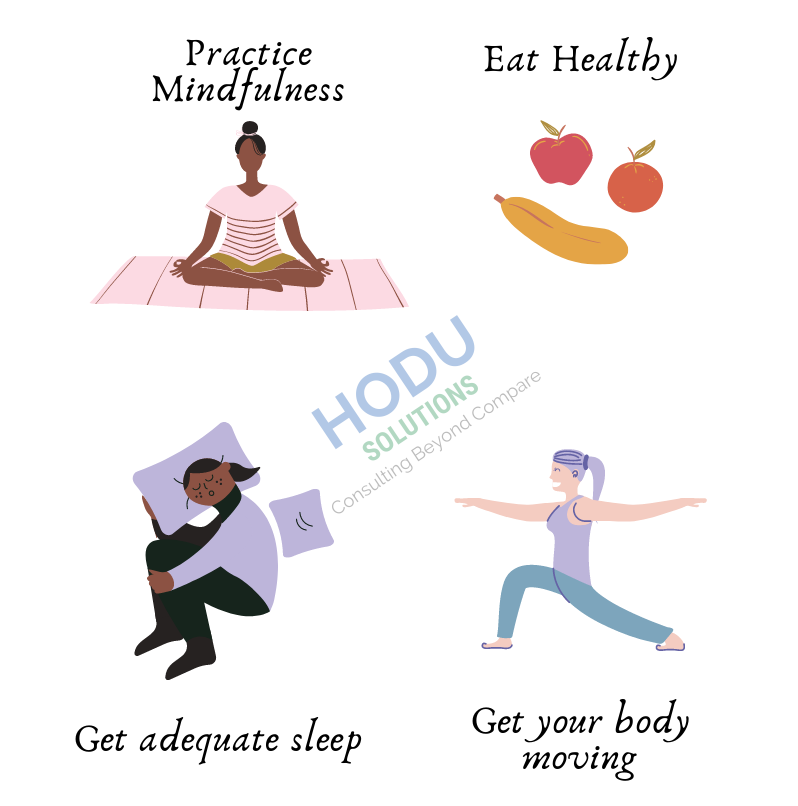
With gyms closed, you need some exercises to keep yourself flexible. You could choose to do a 4-minute workout routine at home. There are a number of mobile apps that can serve as your physical trainer. If you do not like doing exercises alone, join an online class where the trainer uses a tool such as Zoom or Facebook Live. You can alternatively join in 'fitness jam' sessions with your friends. Anything is still possible, just do it!
It not only helps you physically but also helps your mental well-being.
Relax and repeat:
At the end of each workday or whenever you feel overwhelmed, relax. You can call someone you haven't called in ages because you were 'busy'. (Ensure the person you call is not your ex. You want this to be a stress-buster, not stress-tester!)
Learn to relax. It keeps you centered.
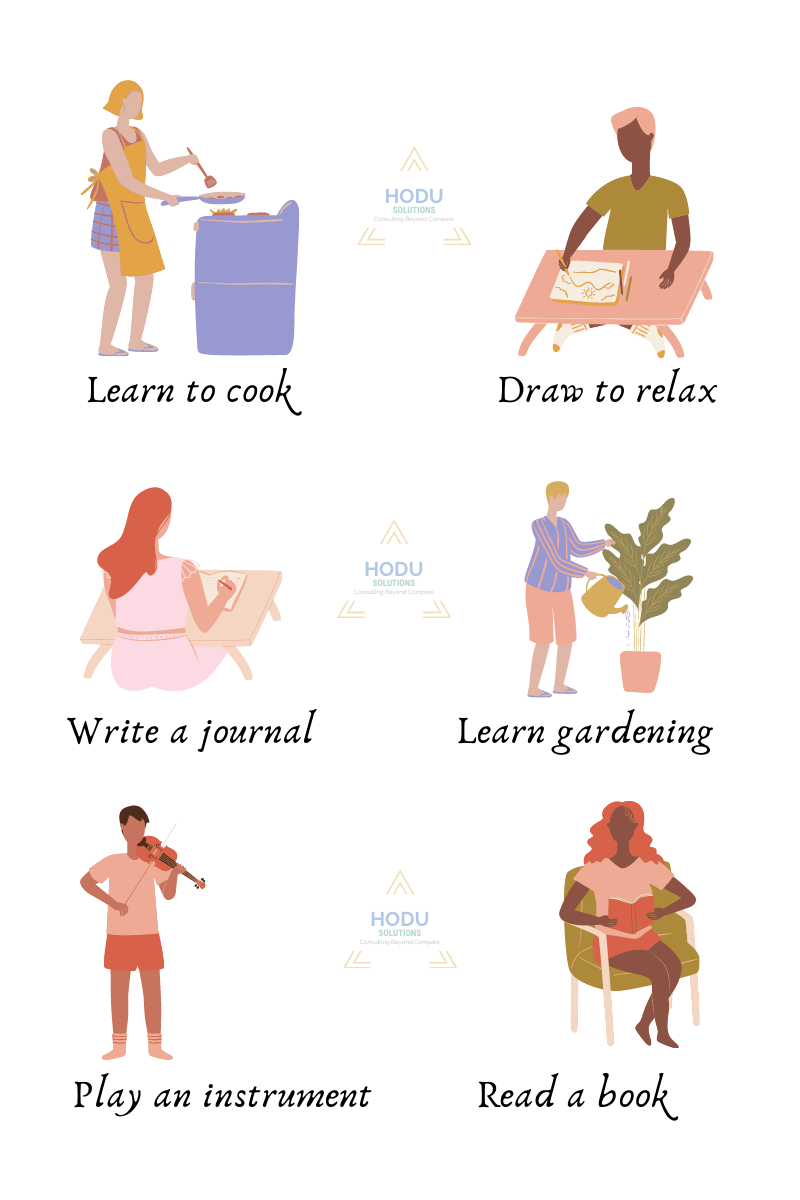
Do an exercise to calm down, not to enhance your focus. Mindfulness, yoga, meditation - all of them help. But if you are not into the mindfulness bubble, you can do anything that helps you relax. Some like to read books, play an instrument, write things down in a journal, draw a portrait or a picture, watch news or sports, and play sports.
If any of the above is not your interests, my personal recommendation is to pick up 'Mandala art'.
Be one with the community:
You are going to spend more time at home now than ever. It is important for you to know people in your community and be one with them. Volunteer your time for your local community. There are so many people who might need your help. Ask yourself these questions – Is there someone in my apartment that is vulnerable and needs help? Is there an association that looks out for people in need where I can help? Are there any improvements needed for your locality that I can contribute to?
Be there for those who need you.
These are difficult times for all but some are more affected than others. Homeless people, people with special needs, and refugees need us more than ever. Be there for them.
Bad days are here to pass:
It is normal to feel lonely. It is okay to have bad days - everyone does. There might be tough times. But do not let adversities overpower you. This is the time to consolidate. Consider this a learning opportunity to progress.
Always have a plan. Stay nimble. Be prepared to change your plan, but failing to plan is planning to fail. Remember, you are not alone. Call someone who is close to you. Ask for help when needed. There are support systems in your community, organization, state, country, and even online. Don't be afraid to reach out.
Thank you for reading.
Vignesh
Part 2 will address managers and teams - it will be published here on Substack, LinkedIn, and Medium.
Follow me on LinkedIn, Medium, and Twitter for updates.
This document that has been sitting on my diary and my laptop for over a few months now, I finally decided to get it out. Thanks to Radhika, Meenakshi, and John who motivated me to publish it on LinkedIn.
This article was first published on LinkedIn and I have moved it to substack.
Research references in this post:
Ruth Eikhof, D. (2007), "Introduction: What work? What life? What balance?", Employee Relations, Vol. 29 No. 4. https://doi.org/10.1108/er.2007.01929daa.001